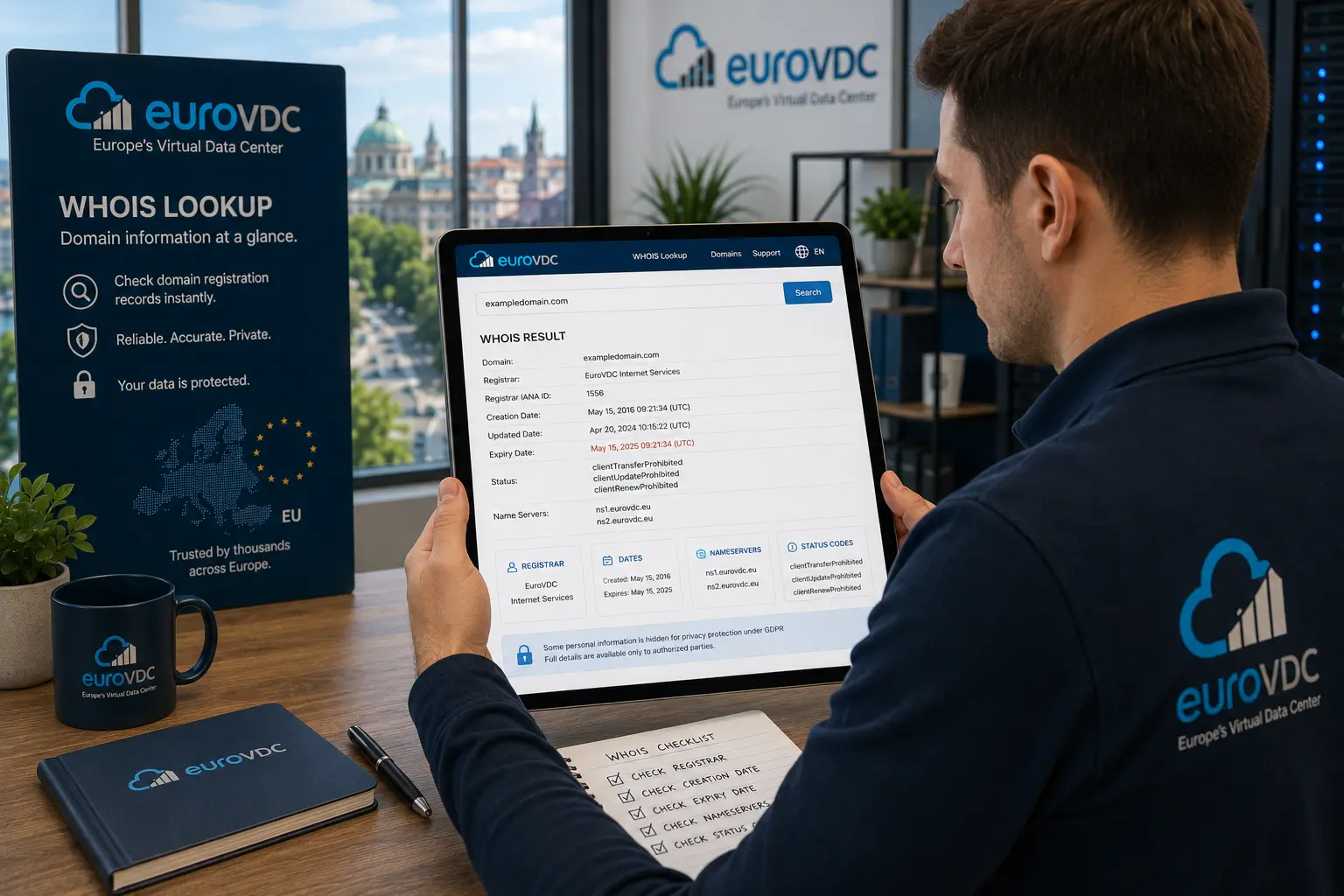

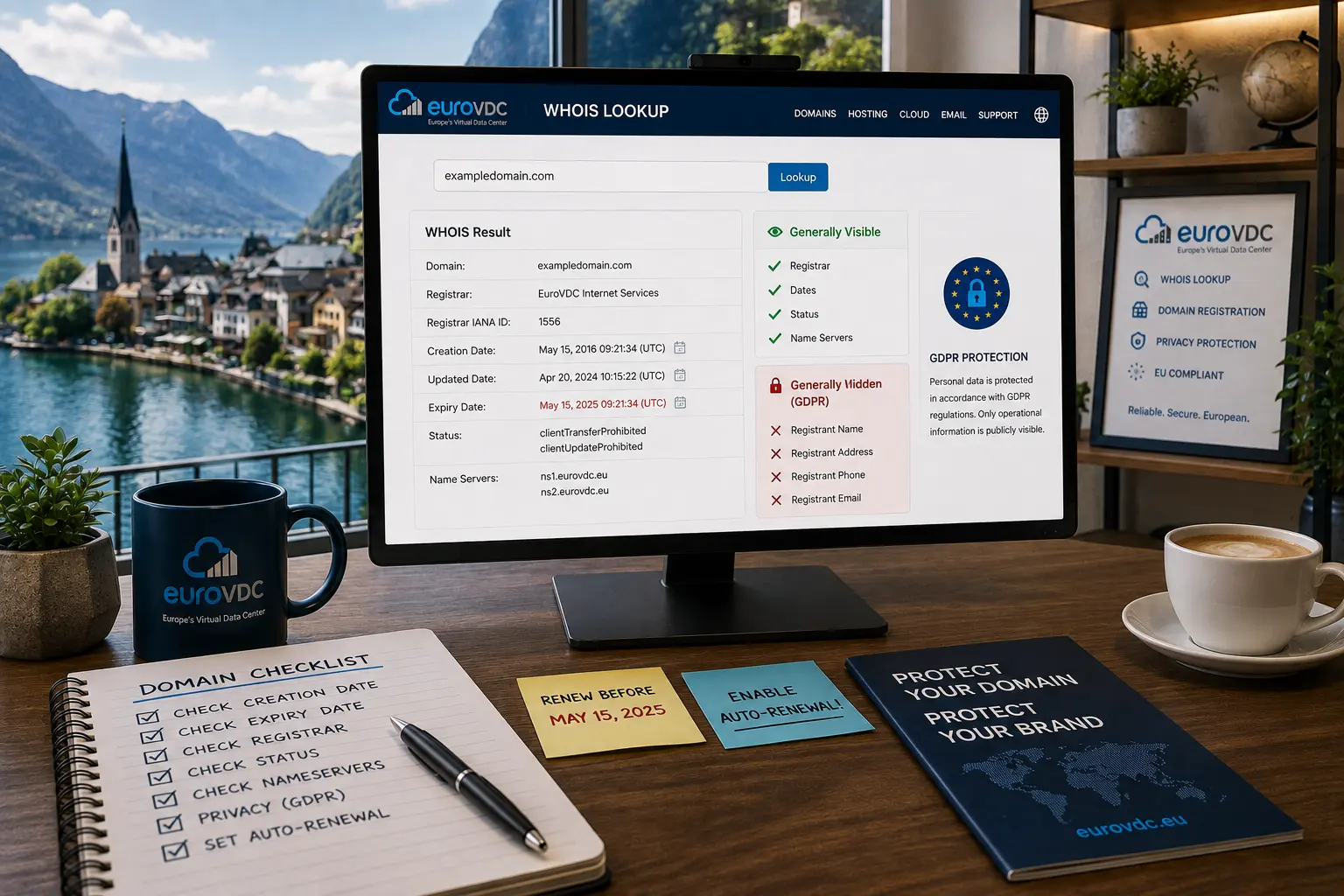
WHOIS privacy is the practice of hiding or redacting registrant personal data from the public directory. Under GDPR and similar rules, many EU-facing registries and registrars no longer publish street addresses, personal emails or phone numbers for natural persons. Operational fields—registrar, dates, nameservers, status—usually stay visible.
This article separates redaction from “anonymous ownership,” explains what remains public and how to stay contactable for abuse and legal notices. Check any domain with EuroVDC Whois lookup.
What GDPR changed in public Whois
Before widespread GDPR enforcement, full registrant cards were common on gTLDs. After, registries narrowed public output. The goal is data minimisation in a globally scrapable database—not to make domains untraceable for law enforcement or contracted parties. Registrars and registries still hold complete records for billing, transfers and lawful disclosure.
ccTLDs apply local policy. .eu, .bg and .tr each have their own publication rules; never assume a .com-style display for every extension.
What typically stays public
- Registrar name and sometimes IANA/registrar URL
- Creation, update and expiry dates
- Nameserver hostnames
- Domain status flags (including transfer locks)
- DNSSEC presence indicators on some systems
- Organisation name for some company registrations (varies by TLD)
What is often redacted: personal name, postal address, personal email and phone. Some outputs show a web form or role email instead of a direct mailbox.
Privacy vs contactability
Privacy protects individuals from scraping and spam. Contactability still matters for security reports, trademark notices and transfer approvals. Practical balance:
- Keep registrant email current inside the registrar panel—even if Whois is redacted.
- Monitor abuse@ and role mailboxes you publish on the site.
- Use the registrar’s official contact/abuse channel when Whois emails are masked.
- Do not disable locks or MFA because “Whois hides me”—panel security is separate.
Redaction is not a substitute for transfer lock, strong passwords or verified recovery contacts.
Myths to drop
- “Private Whois means the owner is shady.” It is default hygiene for many EU registrants.
- “If I cannot see an email, the domain is abandoned.” Check expiry and nameservers instead.
- “Privacy products erase registrar records.” They change public display; the registrar still knows who pays.
- “GDPR deleted Whois forever.” Operational data remains; personal fields are limited.
Business and brand implications
Companies often still want a clear organisational signal for trust. Where policy allows publishing a company name, that can help partners verify you without exposing an employee’s home address. For acquisitions or partnerships, request proof through escrow or registrar letters rather than relying on scraped Whois alone.
EuroVDC, as an EU (Sofia) registrar, aligns registration workflows with European privacy expectations while keeping transfer and renewals operable. Use Whois lookup to read what is public today—not what a blog screenshot showed in 2015.
How to read a redacted record
Focus on registrar, status, dates and NS. If you need to reach the holder for a legitimate reason, follow the registrar’s published process. For your own domains, verify panel contacts match finance and legal mailboxes so FOA and renewal mail arrive.
Frequently asked questions
Does GDPR hide my registrar?
No. The sponsoring registrar is normally still listed so the public can see who manages the registration.
Can I turn privacy off to show my details?
Sometimes for organisations, depending on TLD and registrar options. Personal data publication may still be restricted by registry policy even if you want it public.
Will privacy block domain transfers?
Not by itself. Transfers need unlock, Auth/EPP and working approval contacts in the panel. Redacted Whois can make third parties use registrar channels instead of emailing you directly.
Are .eu and .bg contacts always hidden?
Rules differ by registry and registrant type. Expect stronger protection for natural persons; always check a live lookup for the specific name.
Is redacted Whois enough security?
No. Combine it with transfer lock, MFA on the registrar account and accurate recovery emails.
How do I inspect a domain with EuroVDC?
Use Whois lookup to review public fields and status. For availability checks, switch to domain search on EuroVDC.
Check public data now
See what the directory still shows: Whois lookup.