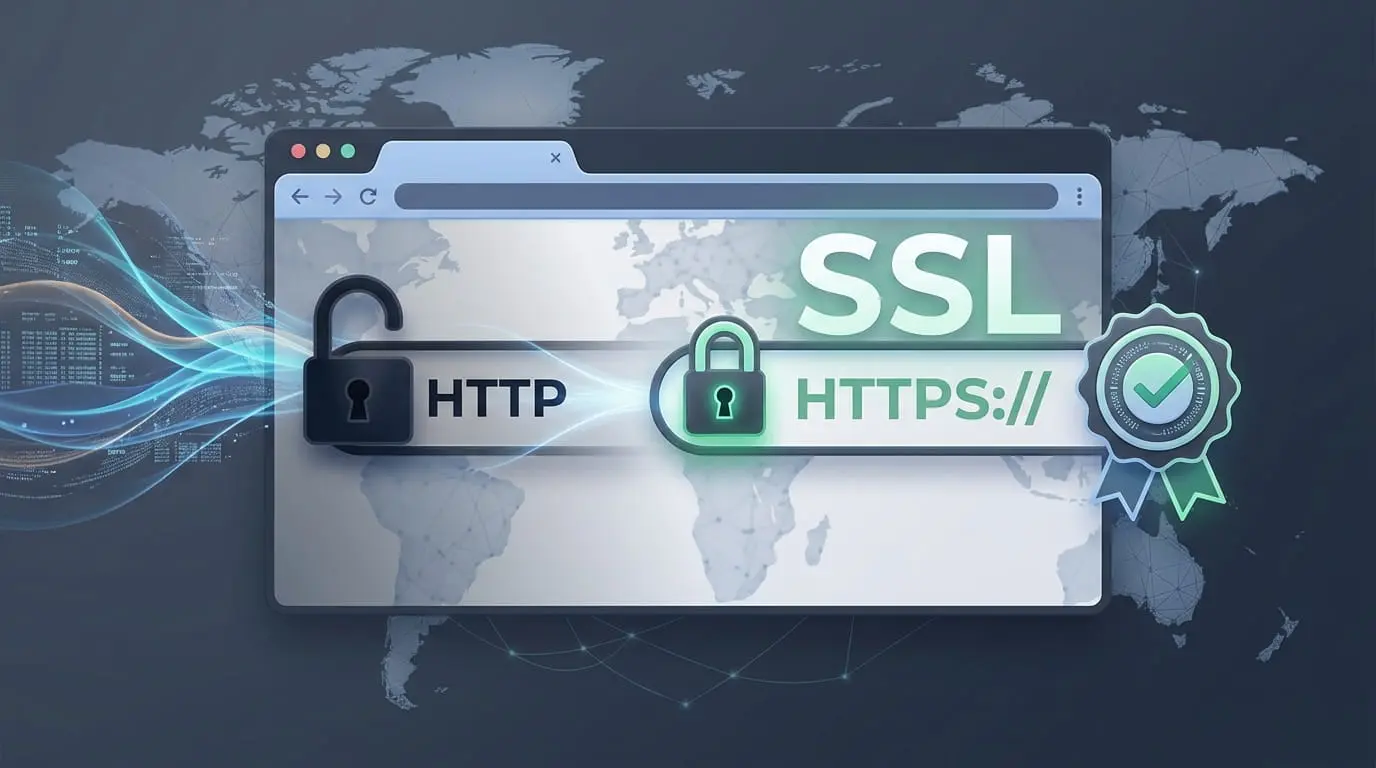

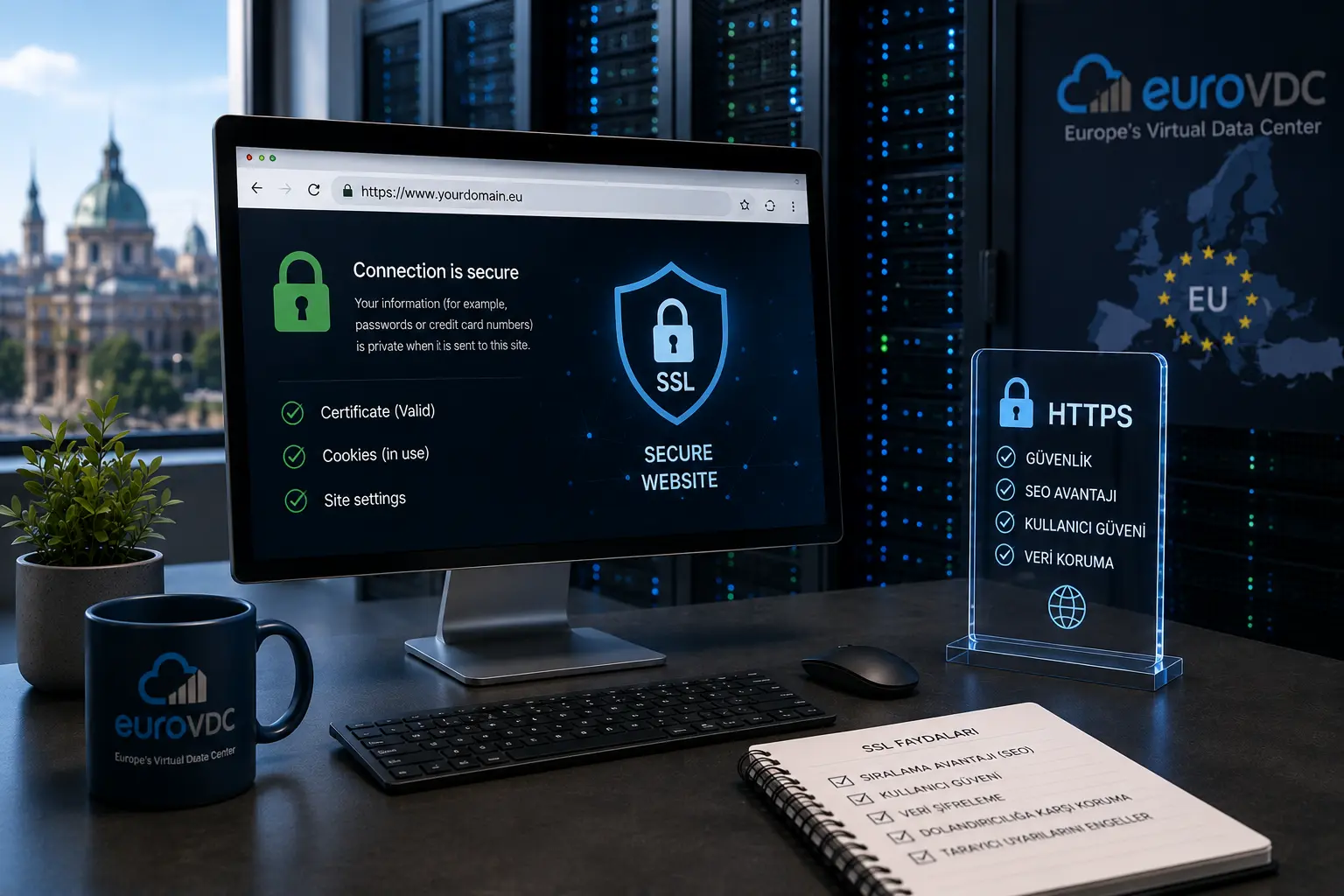
SSL/TLS encrypts traffic between browser and server. Search engines treat HTTPS as a baseline trust and ranking signal; users notice the padlock (or the warning when it is missing). This guide covers why SSL matters for SEO, mixed content pitfalls and how to keep certificates healthy on EuroVDC hosting in Sofia (EU).
Issue or renew certificates via SSL certificates; pair them with solid web hosting.
HTTPS, trust and ranking
Google has treated HTTPS as a ranking signal for years. The effect is incremental—not a substitute for content quality—but HTTP sites face browser warnings that hurt click-through and conversions. For ecommerce, login forms and admin panels, encryption is non-negotiable.
SEO teams should treat HTTPS as hygiene: correct redirects, consistent canonicals and no residual HTTP URLs in sitemaps or internal links.
What a certificate actually does
- Encryption: Data in transit is harder to intercept on public networks.
- Identity: The certificate binds a domain (or SAN list) to a trusted CA chain.
- Browser UI: Valid certs avoid interstitial warnings that kill traffic.
Types (DV, OV, EV) differ in validation depth. For most sites Domain Validation (DV) is enough for SEO and trust UI; organisation validation matters more for brand and procurement optics than for ranking algorithms.
Mixed content: the silent SEO and UX tax
Mixed content means an HTTPS page still loads scripts, styles or images over HTTP. Modern browsers block or warn; Core Web Vitals and crawl consistency suffer when assets fail. After enabling SSL:
- Force HTTPS redirects (preferably 301) from HTTP.
- Update hardcoded http:// URLs in theme, CMS and CDN settings.
- Check the console and a crawl for remaining insecure requests.
- Align HSTS only after you are sure HTTPS works end-to-end.
Operational habits that protect rankings
- Monitor expiry; auto-renew where possible.
- Include www and non-www (or apex and www) in the SAN if both resolve.
- Keep intermediate certificates complete—missing chain causes mobile failures.
- Do not leave staging on HTTP with production links mixed in.
Certificate outages look like downtime to users and crawlers. Treat renewal like backup testing: scheduled, owned and alerted.
EuroVDC approach
EuroVDC hosts in Sofia (EU). Use SSL certificates on web hosting, WordPress hosting or cloud. Encrypt admin and customer traffic first, then clean mixed content so SEO gains are not undone by broken assets.
Frequently asked questions
Does SSL alone improve rankings a lot?
HTTPS is a confirmed but modest signal. The bigger wins are avoiding browser warnings, protecting sessions and keeping crawl/index hygiene clean on HTTPS URLs.
Is free Let’s Encrypt enough for SEO?
Yes for encryption and the padlock. Ranking systems care that HTTPS works correctly, not which commercial brand is on the certificate.
What is mixed content?
HTTPS pages loading HTTP assets. Fix URLs and redirects so every resource is secure; otherwise browsers block scripts or show warnings.
Do I need EV certificates for Google?
No. EV does not unlock special ranking boosts. Choose validation level for business trust needs, not for SEO myths.
Should HTTP redirect to HTTPS?
Yes—use permanent redirects and one preferred host (www or apex). Update sitemaps and canonicals to match.
How do I get SSL with EuroVDC?
Open SSL certificates, choose a product that fits the domain, install on your hosting or cloud and verify the full chain in a browser and SSL checker.