

When you shortlist hosting in Europe, “GDPR-compliant hosting” is not a badge on a brochure—it is a vendor-selection filter that decides whether personal data stays under workable transfer rules, whether a DPA exists before go-live, and whether buyers trust your stack. This article is about why that filter is critical at purchase time. It is not a controls encyclopedia, not a Sofia cutover checklist, and not a general “why host in the EU?” essay.
Evaluate offers on web hosting or isolated cloud server plans in Sofia (EU)—then harden what you buy.
Critical ≠ “certified magic”
No honest host makes your organisation GDPR-complete. What is critical when choosing:
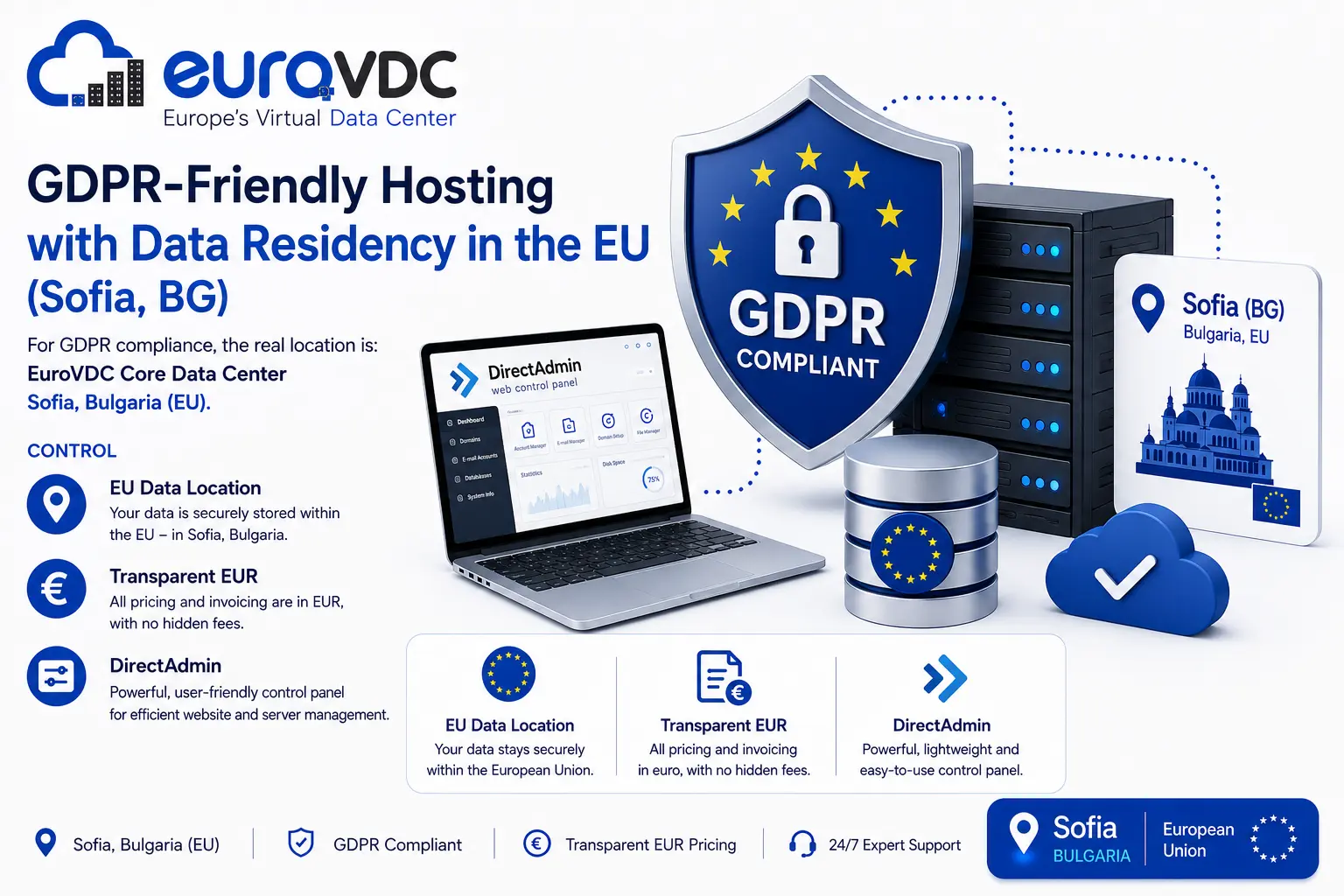
- Processing location you can name: City and country (Sofia, Bulgaria—EU), not only “Europe” as a sales region.
- Processor willingness: A signed DPA / AVV covering Article 28 duties before production data lands.
- Subprocessor clarity: Who touches tickets, DNS, anti-abuse, backups—disclosed where your notices require it.
- Security baseline you can operate: HTTPS, access controls, backup restore paths—not slogans.
- Exit and export: How you leave with data intact if the vendor relationship ends.
Skip any of these at contract time and you inherit remediation cost after the shop or SaaS is live—exactly when counsel and customers ask harder questions.
Why Europe buyers treat GDPR hosting as a gate
- Procurement language: RFPs and partner questionnaires ask where data sits and whether a DPA is available. Vague answers lose deals.
- Transfer risk: Primary production outside the EEA triggers extra transfer analysis for that dataset. EU racks reduce that class of friction.
- Incident optics: After a breach scare, “we never signed processor terms” is worse than a slow ticket.
- Shared fate with subprocessors: Your host’s vendors become part of your story—know them early.
- Honest marketing: Claiming GDPR while running unpaid HTTP admin panels destroys trust faster than a competitor’s price.
Vendor claim decoder (buy-side)
| Claim | Ask next | Red flag |
|---|---|---|
| “GDPR certified hosting” | Certified for what? Show DPA + location | Certificate replaces contract |
| “EU data centres” | Which city/country for my plan? | Unnamed “EU region” |
| “Fully compliant” | Whose compliance—yours or theirs? | Host claims your lawful basis |
| “Backups included” | Where stored? Restore tested? | Same disk, no drill |
Prefer concrete Sofia (EU) answers plus a DPA path over glossy compliance seals. Dedicated enters only when contracts demand single-tenant metal—see dedicated server.
Sofia EU in the purchase decision
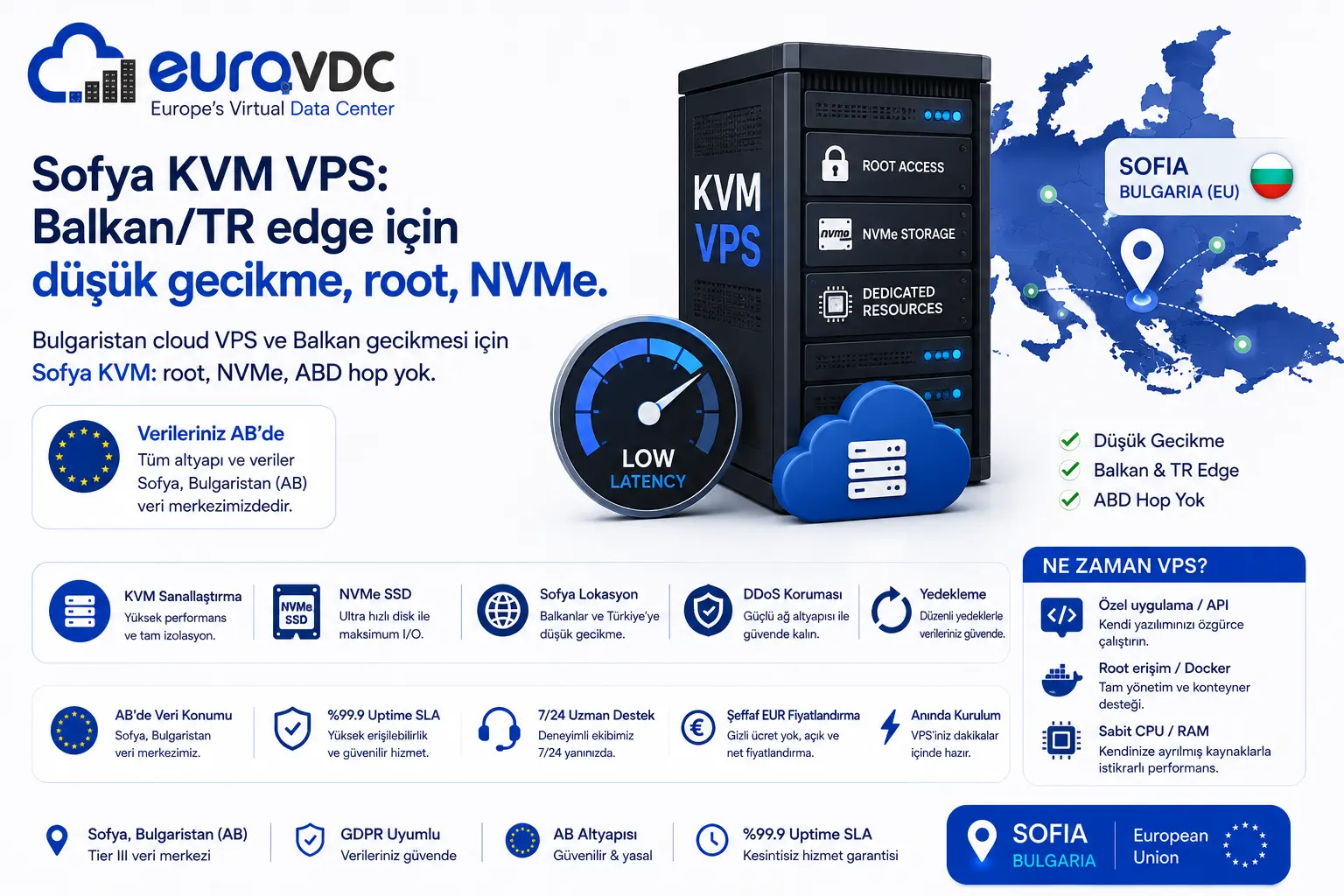
EuroVDC places hosting and cloud in Sofia (EU). Use that named footprint in questionnaires, sign processor terms, then operate HTTPS and restores. Geography opens the gate; your configuration keeps it open.
Frequently asked questions
Is this the same as “why EU hosting after GDPR”?
No. That argues location benefits. This piece is why GDPR-ready hosting criteria are critical at vendor selection time.
Does buying EU hosting make me compliant?
No. It improves transfer posture and procurement answers; you still own lawful basis, notices and operational controls.
What must exist before go-live?
Named location, signed DPA, HTTPS on public endpoints, access hygiene and a restore story you can demonstrate.
Hosting or cloud for personal data?
Small CMS: hosting. Apps needing root/isolation: cloud. Match sensitivity to ops skill.
Where do EuroVDC servers run?
Sofia (EU)—state that accurately in forms and privacy copy.
How do I start on EuroVDC?
Shortlist web hosting or cloud server, confirm DPA, then lock TLS and access before production data.