
Trying to take cards, wallets or even newsletter signups over plain HTTP is a conversion dead end. Modern browsers mark the session insecure; payment gateways expect TLS; customers bail when the padlock is missing or broken. This piece is about ecommerce trust and sales friction—not SEO ranking myths or DV/OV/EV validation depth. Those angles live in other EuroVDC guides.
Issue certificates via SSL certificates on Sofia web hosting or your server stack.
Why “sell without SSL” collapsed
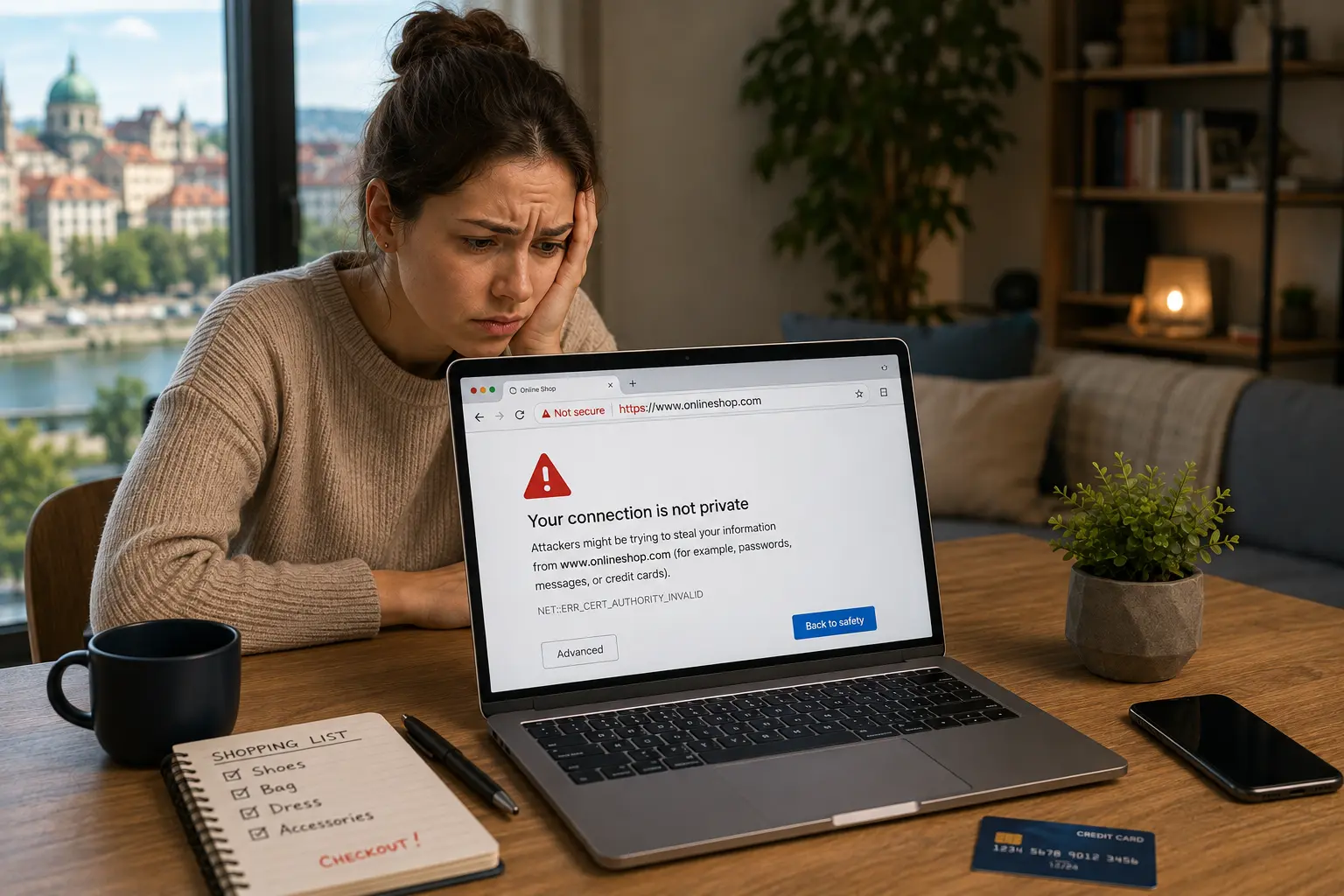
- Browser UI: “Not secure” next to the URL kills confidence before price comparison starts.
- Payment processors: Checkout APIs and iframes assume HTTPS; mixed or HTTP origins break flows.
- Password and address forms: Even lead-gen pages leak credentials and PII without TLS.
- Partner audits: Marketplaces and banks ask for HTTPS on the merchant domain.
Encryption does not replace fraud tools or PCI scope design—but without it you often never reach those layers. Shoppers compare you to the last secure store they used; a warning interstitial is enough reason to abandon even a competitive cart.
Guest checkout and saved cards both assume a stable HTTPS origin. Cookie flags, session tokens and payment return URLs break in subtle ways when protocol or hostname drift mid-funnel.
Checkout trust checklist
- Valid cert on every host users hit: apex, www, shop subdomain, payment return URLs.
- Full chain installed—mobile networks fail incomplete intermediates first.
- 301 HTTP → HTTPS on the preferred host; no soft dual serving.
- No mixed content on cart and checkout templates (scripts, CSS, payment widgets).
- HSTS after HTTPS works end-to-end—not before.
- Renewal monitoring—an expired cert mid-sale looks like a closed store.
Sales impact vs SEO impact (keep them separate)
HTTPS helps rankings modestly and cleans crawl signals—that is a different article. Here the loss is immediate: abandoned carts, failed callback URLs, support tickets about “your site is dangerous.” Fix trust first; then polish SEO hygiene.
DV certificates encrypt traffic the same way for padlock purposes. Upgrade validation (OV/EV) when brand or procurement asks—not because Google secretly rewards a green bar that no longer exists.
Sofia EU shop framing
EuroVDC hosts in Sofia (EU). Pair SSL certificates with web hosting for panel shops, or terminate TLS on cloud/dedicated for custom stacks. Regional merchants gain a coherent EU origin story while checkout stays encrypted.
Frequently asked questions
Can I sell on HTTP if I use a third-party checkout?
Risky. Return URLs, cookies and trust UI still touch your domain. Gateways and browsers expect HTTPS on the merchant site.
Is this the same as SSL-for-SEO posts?
No. This guide is conversion and payment trust. SEO ranking-factor checklists and install playbooks are separate.
Do I need EV to take payments?
Usually no. A valid DV cert with clean redirects and no mixed content is enough for padlock and most gateways.
What breaks sales fastest?
Expired certificates, wrong hostname on the cert, and mixed-content blocked scripts on checkout.
Where should I host the shop?
Sofia EU web hosting for many CMS shops; cloud when you need root isolation.
How do I start on EuroVDC?
Order or renew via SSL certificates, force HTTPS, then test cart and payment return paths.