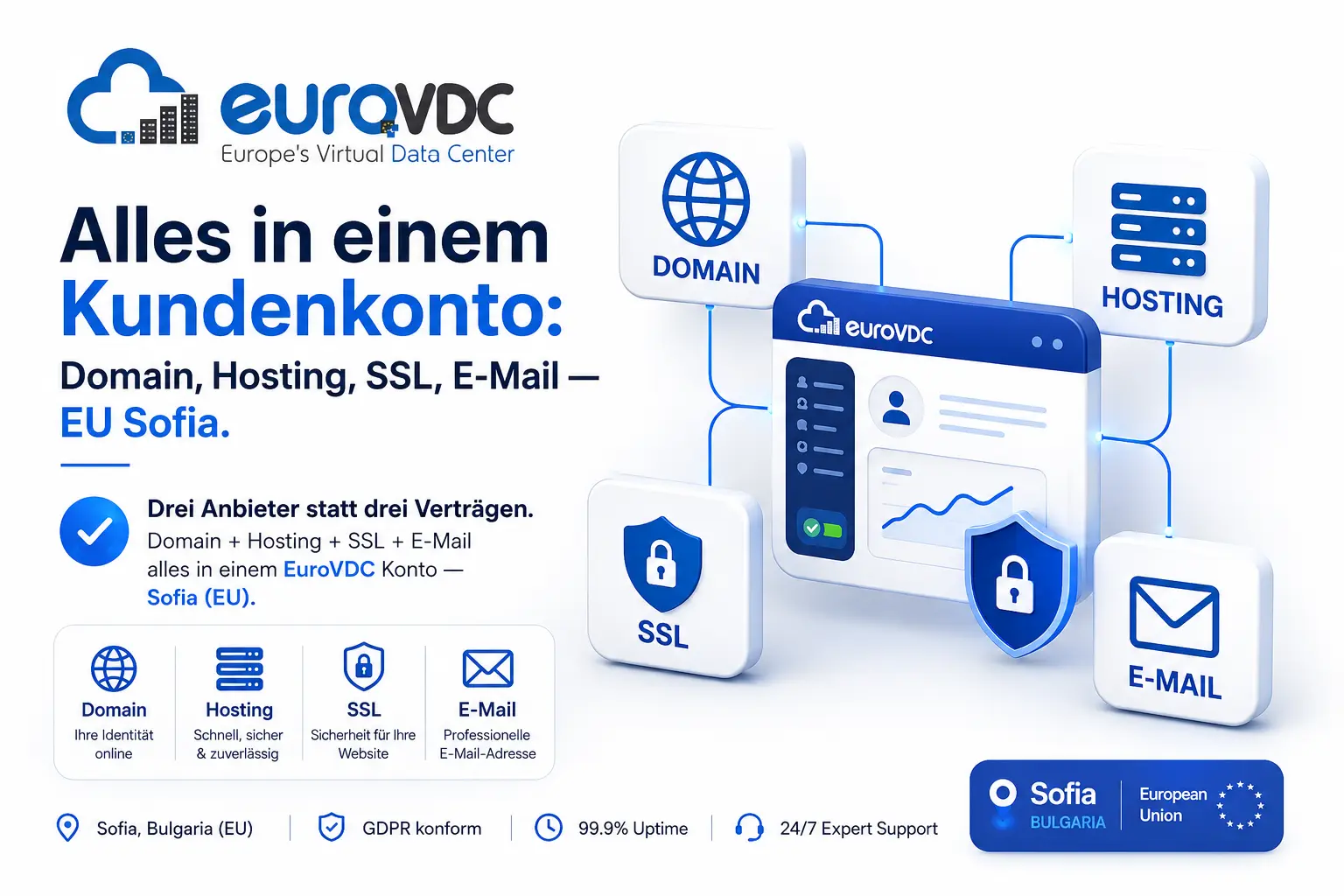
A common small-business setup spreads one brand over four dashboards: the domain at one registrar, hosting at another provider, a certificate from a third and mail on a free consumer service. Every renewal, DNS change or outage then starts with the question of which portal holds the answer. Putting the core pieces under one account removes most of that friction.
The four pieces that belong together
- Domain: registration, renewal, nameservers and the transfer lock, kept in one place. See domain search.
- Hosting: files, PHP, databases and the panel, on web hosting in Sofia.
- SSL: certificates issued and renewed for the same names, from SSL certificates.
- Email: mailboxes at your domain on corporate email.
When DNS sits beside hosting and mail, MX records, SPF and certificate validation stop being a hunt across portals.
What you gain
- One invoice and one ticket when something expires or breaks.
- Cleaner cutovers: lower the TTL once, then change nameserver, mail and site records in one place.
- Cleaner offboarding: revoke access in one account when a person leaves.
- A consistent location answer: site and mail both run in Sofia, in the EU.
What one account does not mean
You can still send bulk campaigns through a specialised email service. Authorise it in SPF and keep staff and transactional mail on your own mailboxes to protect reputation. The aim is that the core stack of name, site, encryption and business inbox has one owner and one place to look.
A setup order that avoids mistakes
- Check and register the name on domain search.
- Set up hosting and point the domain to it.
- Enable HTTPS and confirm the redirect from HTTP.
- Create the mailboxes, then publish SPF, DKIM and DMARC. SPF, DKIM and DMARC in order shows the sequence.
- Set renewal reminders for the domain and certificate, then test the site and mail headers before you announce anything.
If the domain already lives elsewhere, you can keep it there and change only the nameservers, or transfer it. Moving a domain without taking the site offline explains the safe order.
Frequently asked questions
Must the domain and hosting come from the same provider?
No. One account simply removes the most common DNS and renewal mix-ups.
Does a single account make me GDPR compliant?
No. It keeps your location statements consistent. Lawful processing and retention remain your responsibility.
Can I keep my marketing email tool?
Yes. Add it to SPF and keep business mail on your mailboxes.
Is a free certificate enough?
Often yes for public sites with working auto-renewal. See when free SSL is enough.